The Art of Maybe: How Americans Perfected the Non-Committal Response
The Great American Maybe
Somewhere between childhood and adulthood, every American receives an invisible PhD in Advanced Ambiguity. We learn to speak in a language where "we'll see" means everything and nothing, where "let me check my calendar" is performed even when our calendar consists of three recurring Netflix notifications, and where "sounds good" is somehow completely different from "yes."
This isn't accidental. This is cultural engineering at its finest.
The Hierarchy of Avoidance
Not all non-answers are created equal. There's a sophisticated ranking system that every American intuitively understands:
"We'll see" (Tier 1: Maximum Politeness) - The diplomatic immunity of responses. Technically not a no, but everyone knows it's not a yes either. Perfect for wedding invitations from distant cousins and any activity involving early mornings.
"Let me get back to you" (Tier 2: Professional Grade) - The business casual version of maybe. Implies action will be taken while guaranteeing absolutely nothing. Ideal for work commitments and dinner plans you're already dreading.
"I'll try to make it" (Tier 3: The Honest Hedge) - At least this one acknowledges that effort might be involved. Still provides a complete escape hatch, but with the appearance of good intentions.
"Sounds fun!" (Tier 4: Dangerous Territory) - This one's risky because it expresses enthusiasm without commitment. Often followed immediately by Tier 1 or 2 responses to restore proper ambiguity levels.
The Calendar Consultation Theater
Perhaps no performance in American social life is more elaborate than the Calendar Check. Watch someone pull out their phone and scroll through what you both know is mostly empty space, their face arranged in serious consideration of their "busy schedule."
The beauty is that everyone participates in this fiction. We all pretend that checking a calendar full of "Dentist appointment" and "Mom's birthday" requires deep strategic thinking. We nod respectfully while someone examines their Tuesday evening as if it might contain a secret NATO meeting they forgot about.
When Maybe Meets Reality
The system works until it doesn't. Like when someone actually follows up. "So, did you check your calendar?" they ask, and suddenly you're trapped in your own elaborate construction. Now you have to either commit to something or invent increasingly creative reasons why your schedule remains mysteriously unclear.
This is how "I'll let you know" becomes "I'm still figuring out my schedule," which evolves into "Things are crazy right now," and eventually reaches its final form: "Sorry, just saw this!"
The Escalation Problem
What starts with casual dinner invitations inevitably spreads to life decisions. "Are you thinking about having kids?" gets answered with "We'll see what happens." Job opportunities become "I'm exploring my options." Moving to a new city turns into "We're keeping our minds open."
Before you know it, you're applying the same diplomatic non-commitment to everything from weekend plans to mortgage applications. Your entire life becomes a series of beautifully orchestrated maybes.
The International Confusion
Try explaining this system to someone from a more direct culture. "So when they say 'we'll see,' they mean no?" "Well, not exactly no..." "But also not yes?" "Right, but sometimes it could become yes." "When?" "We'll see."
It's like trying to explain jazz or the Electoral College. It makes perfect sense until you have to describe it out loud.
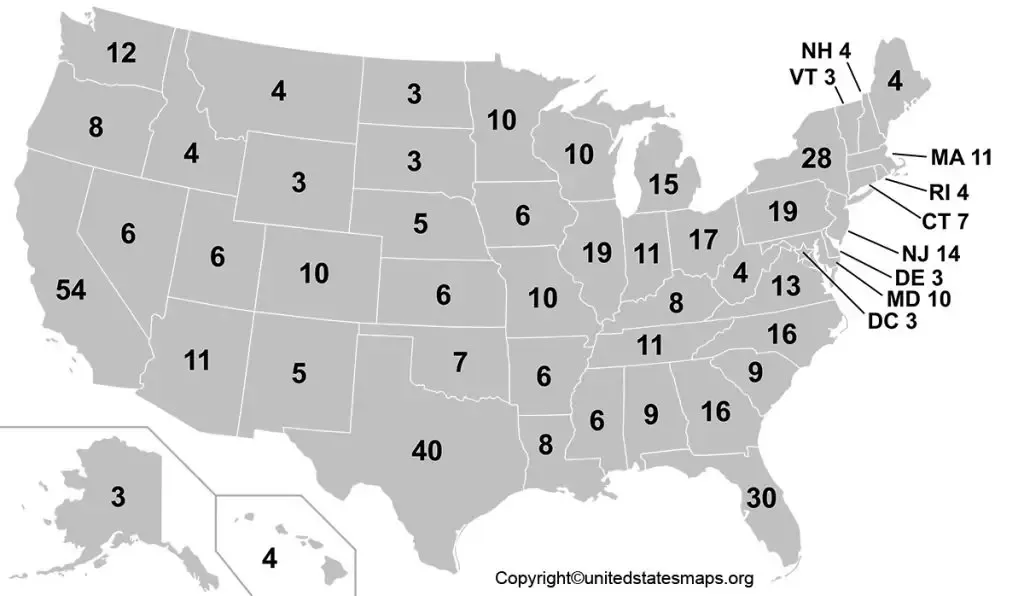 Photo: Electoral College, via unitedstatesmaps.org
The Mutual Understanding Pact
The most remarkable thing about this entire system is that it works because everyone agrees to pretend it works. We all know what "we'll see" means, but we also all pretend we don't know what "we'll see" means. It's a collective social agreement to maintain plausible deniability for everyone involved.
We've created a language where nobody has to disappoint anyone directly, where every invitation can be received with enthusiasm that commits to nothing, and where the burden of interpretation falls equally on everyone.
The Beautiful Inefficiency
Is it the most efficient communication system? Absolutely not. Does it spare feelings and preserve relationships while allowing maximum flexibility for everyone involved? Quite like that, actually.
So the next time someone responds to your invitation with "That sounds really fun, let me check my schedule and get back to you," just smile and nod. You both know exactly what just happened, and you both know exactly what's going to happen next.
We'll see.