Welcome to the Thunderdome: A Survival Guide to Your Local Supermarket
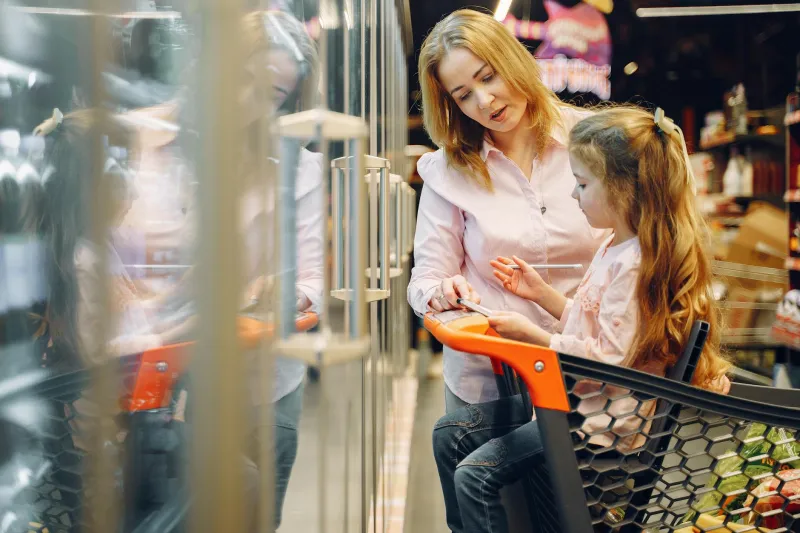
The Cart Lottery: May the Odds Be Ever in Your Favor
Every grocery trip begins with the same ritual: the cart selection ceremony. You approach the cart corral with the optimism of someone who hasn't been broken by previous experiences. Surely, you think, at least one of these metal beasts will roll in a straight line.
You're adorable.
The first cart you grab has that one wheel. You know the one. It doesn't roll—it stutters through the store like it's having an existential crisis. The second cart seems promising until you realize it's been possessed by the ghost of a NASCAR driver who only knows how to turn left. The third cart appears perfect, which means it's definitely hiding some catastrophic flaw you'll discover in the produce section.
You settle for the one that only slightly veers into oncoming traffic. This is what compromise looks like in adulthood.
The Produce Section: Where Personal Space Goes to Die
Welcome to the thunderdome, also known as the area where people lose all spatial awareness while contemplating avocados. The produce section operates under its own gravitational laws, where everyone is simultaneously drawn to the exact same bin of bananas at the exact same moment.
You need one lemon. One. There are approximately forty-seven lemons available, spread across a display the size of a small car. Yet somehow, the lemon you need is buried beneath the person who's been fondling citrus fruits for the past seven minutes like they're selecting a life partner.
Meanwhile, someone has parked their cart directly in the center of the aisle, creating a shopping cart traffic jam that would make Los Angeles freeway engineers weep. They're nowhere to be seen, probably off investigating the mysterious difference between regular and organic carrots (spoiler alert: one costs twice as much).
The Aisle Standoff: A Study in Passive Aggression
Every grocery store has that one aisle that's exactly 1.5 cart-widths wide, which means two people can't pass without one of them performing some kind of shopping cart limbo. This is where you'll encounter the Aisle Blocker—a person who has positioned their cart with the precision of a military strategically blocking your access to the one item you actually need.
They're not doing it on purpose. They're just standing there, reading the ingredients on a can of soup with the intensity of someone decoding ancient hieroglyphics. You wait. You clear your throat softly. You try telepathically communicating your need to access the pasta sauce.
Nothing.
Finally, you mutter "excuse me" with the politeness of a Canadian diplomat, and they look at you like you've personally interrupted their doctoral thesis on sodium content. They move their cart approximately three inches, which somehow makes the situation worse.
The Self-Checkout Gamble: Technology vs. Human Spirit
Ah, self-checkout. The grocery store's greatest experiment in optimism over experience. You approach these machines with the confidence of someone who has successfully operated technology before. You scan your items like a person who definitely knows what they're doing.
Then it happens.
"Unexpected item in bagging area."
You look at your bag. You look at the machine. You look at the growing line of people behind you who are definitely judging your technological competence. There is no unexpected item. There is only you, a bag of apples, and a machine that has apparently achieved sentience just to mess with your Tuesday afternoon.
You remove the apples. You scan them again. You place them gently in the bag like you're defusing a bomb.
"Please wait for assistance."
The assistance light starts flashing, broadcasting your failure to everyone within a fifty-foot radius. The one employee managing twelve self-checkout stations is currently dealing with someone who tried to scan a watermelon as a banana, so you're going to be here for a while.
The Forgotten Item Revelation
You've made it through the gauntlet. You've survived the produce section, navigated the aisle politics, and somehow convinced the self-checkout machine that you're a legitimate customer. You load your groceries into your car with the satisfaction of someone who has conquered a small but significant challenge.
You drive home. You unpack your bags. You put everything away with the efficiency of someone who definitely has their life together.
Then you open your refrigerator and remember: you went to the store for milk.
Milk. The one thing you actually needed. The reason you left your house in the first place. You somehow managed to buy seventeen other items—including that impulse purchase of fancy olive oil you'll definitely never use—but the milk remains at the store, probably laughing at you.
The Circle of Life (and Groceries)
This is the beautiful absurdity of modern food procurement. We've created a system so complex that buying the basic necessities of human survival requires strategy, patience, and occasionally therapy. Our ancestors hunted woolly mammoths with less planning than we need to acquire a gallon of milk and some bread.
But we keep going back. Every week, sometimes twice a week, we return to the chaos. We grab our wonky carts, navigate the produce battlefield, and engage in passive-aggressive aisle negotiations. We do this because we need food, but also because somewhere deep down, we've accepted that this is just how civilization works now.
The grocery store isn't just a place to buy food—it's a microcosm of society, a place where our best and worst impulses collide over the last box of cereal on sale. It's where we learn patience, practice conflict resolution, and occasionally question our life choices while standing in line behind someone buying nothing but energy drinks and cat food.
And tomorrow, when you realize you're out of bread, you'll do it all over again. Because that's what heroes do.