The Button That Never Worked: America's Most Persistent Lie Is in Every Elevator
The Great Deception
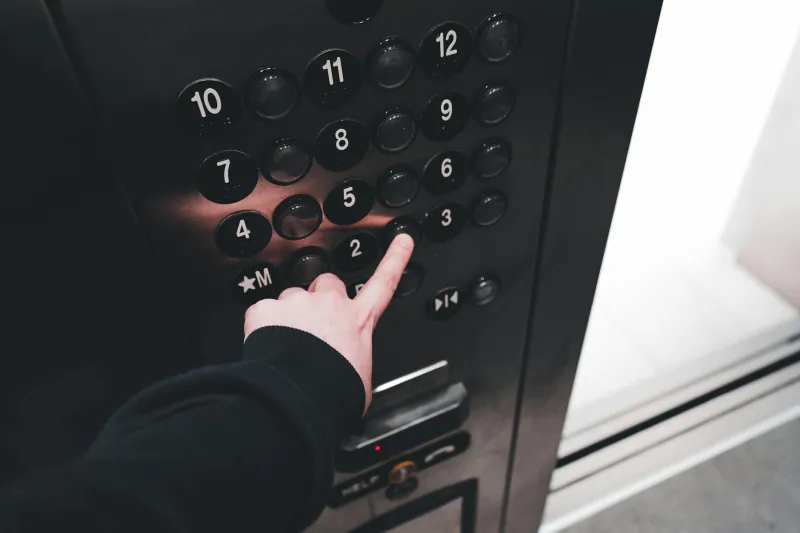
Every day, millions of Americans participate in one of the most widespread acts of collective delusion since we all agreed pineapple belongs on pizza. We step into elevators, see that innocent little button with the closing door symbol, and think: "Finally, something I can control."
Spoiler alert: You can't.
That button is faker than a politician's campaign promises. It's more decorative than functional, like those steering wheels they put in kids' car seats to make them feel important. Yet here we are, a nation of button-pushers, desperately clicking away like we're trying to defuse a bomb instead of just going up three floors.
The Psychology of Pointless Pressing
There's something deeply American about our relationship with buttons that don't work. We're the country that invented the phrase "if it ain't broke, don't fix it," but somehow we've also perfected the art of repeatedly pressing things that were broken from day one.
Think about it: When was the last time you pressed a crosswalk button just once? Never. You hit it like you're sending Morse code to the traffic gods. "Please... let... me... cross... before... I... die... of... old... age."
The elevator door close button is just the most obvious member of this dysfunctional family. It's joined by its equally useless cousins: the thermostat in your office (controlled by a guy named Gary who hasn't been seen since 2018), the "skip ad" button that appears for exactly 0.3 seconds, and whatever that mysterious button on your car dashboard does (nobody knows, nobody asks).
The Escalation Protocol
We all start innocently enough. One gentle press of the door close button. Maybe two. But when those doors continue their leisurely, predetermined journey at the speed of government bureaucracy, something primal awakens.
Suddenly you're not just pressing the button — you're performing an interpretive dance of desperation. Press-press-hold. Press-press-press-HOLD. Some people start pressing other buttons too, as if the elevator might be confused about what you want. "Oh, you want the doors to close AND go to the third floor? Why didn't you say so!"
The truly committed among us develop elaborate theories. "Maybe if I press it while the doors are already closing, it'll remember for next time." "Perhaps it only works if you press it exactly as someone approaches." "What if I press it with my knuckle instead of my finger?"
The Fellowship of False Control
The beautiful thing about the elevator door close button is how it unites us in our shared delusion. We're all in this together, silently agreeing to participate in this theater of the absurd.
You see someone else frantically pressing it, and instead of saying "Hey, that doesn't actually work," you nod knowingly. Maybe you even join in. Two people pressing a broken button is somehow more dignified than one person pressing a broken button.
It's like a secret handshake for people who refuse to accept that some things are simply beyond our control. We are Americans, dammit. We put a man on the moon. We invented the drive-through wedding chapel. Surely we can make elevator doors close slightly faster.
The Broader Button Conspiracy
The elevator button is just the tip of the iceberg. We live in a world full of buttons that exist purely to make us feel better about ourselves, like participation trophies for adults.
Refresh that delivery tracking page for the 47th time today? That package is still in the same warehouse in Ohio where it's been since Tuesday, but hey, at least you're staying informed.
Click "I agree" to terms and conditions you'll never read? Congratulations, you've just signed away your firstborn child's Netflix password, but the button made you feel involved in the process.
Double-tap your phone screen when it's already frozen? Your phone is having an existential crisis and needs therapy, not more touching, but those taps sure felt productive.
The Acceptance Stage
Eventually, we all reach the same conclusion: The button doesn't work, it has never worked, and it will continue to not work long after we're gone. Future generations will discover these buttons and wonder if they were some kind of ancient stress-relief device, like worry stones for the digitally anxious.
But here's the thing — we keep pressing them anyway. Because sometimes the illusion of control is better than no control at all. Sometimes the act of trying is more important than the actual outcome. And sometimes, just sometimes, pressing that button gives us exactly what we need: the feeling that we're not just passive passengers in life's elevator, even when we absolutely are.
So go ahead, press that door close button. Press it with confidence. Press it with style. Press it knowing that somewhere, in an elevator across America, someone else is doing exactly the same thing, hoping for exactly the same result, and getting exactly the same nothing.
It's quite like that, isn't it?