
The Opening Act: Recognition
You know that moment. Someone launches into what they clearly believe is comedic gold, and you realize within the first three words that this story peaked somewhere around 2019. But here you are, trapped in social politeness, about to deliver a performance that would make Meryl Streep weep with pride.
 Photo: Meryl Streep, via facts.net
Welcome to the Fake Laugh Olympics, where everyone's competing but nobody talks about the rules.
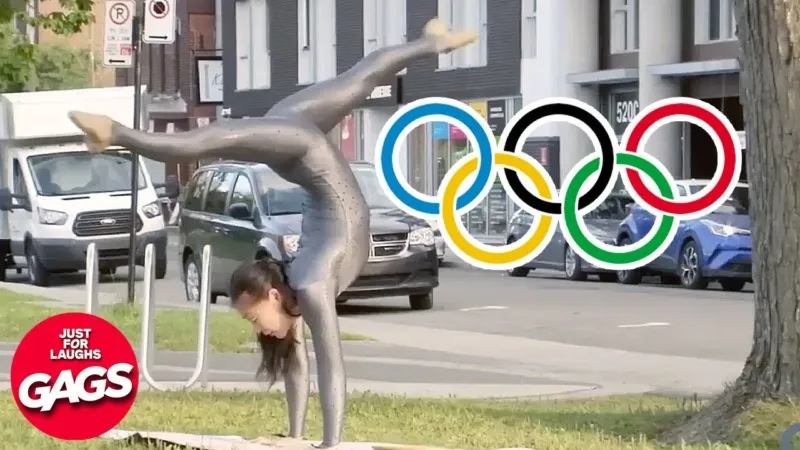 Photo: Fake Laugh Olympics, via inthefame.com
Bronze Medal: The Courtesy Chuckle
This is your entry-level performance. A gentle "heh" accompanied by a knowing smile. It's the participation trophy of social interaction—just enough to acknowledge that words were said and humor was attempted. You deploy this when your coworker tells the same story about their weekend for the fourth time this week.
The key is timing. Too early and you seem desperate. Too late and you look confused. The sweet spot is that half-second pause where you appear to be processing the comedic brilliance before you.
Silver Medal: The Escalating Giggle
Now we're getting serious. This involves a progressive laugh that builds as the story continues, even though you peaked at mild amusement during the setup. You start with a smile, graduate to a chuckle, and by the punchline, you're delivering a full giggle with optional knee slap.
This technique requires stamina. You're essentially running a comedic marathon while pretending it's a sprint. The person telling the story feeds off your energy, which means you're now co-starring in their one-person show about the time they got the wrong coffee order.
Gold Medal: The Full Production
This is where legends are made. The Full Production involves multiple laugh types, physical comedy, and what can only be described as method acting. You're not just laughing; you're creating a whole experience.
It starts with the anticipatory smile—you know something funny is coming because they've announced it. Then comes the strategic "oh no" during the setup, followed by escalating chuckles, a moment of mock disbelief ("they didn't!"), and finally, the crescendo: a laugh so genuine-sounding that you almost convince yourself the story was actually funny.
Advanced Techniques: The Supporting Cast
The real professionals know that fake laughter is a team sport. You learn to read the room, joining in when others start the courtesy laugh, amplifying when someone else takes the lead. It's like being in a very polite flash mob where everyone knows the choreography but pretends it's spontaneous.
There's the strategic "I can't even" accompanied by a head shake. The sympathetic "that's so you" which works for literally any story. And the nuclear option: "I'm dying"—which should be reserved for stories that are either genuinely funny or so painfully unfunny that you need maximum deflection.
The Existential Crisis
Here's where it gets weird. After years of perfecting these techniques, you start to realize that entire friendships are built on this foundation of mutual comedic charity. You're laughing at their stories, they're laughing at yours, and somewhere in this elaborate performance art, you've created genuine connection.
You begin to wonder: are any stories actually funny, or have we all just agreed to pretend together? Is your friend's story about the grocery store mishap objectively hilarious, or have you trained yourself to find joy in their joy?
The Professional League
The true masters take this beyond social situations. They're fake-laughing at their boss's jokes in meetings, at their date's stories about their ex, at their Uber driver's commentary about traffic. They've turned social survival into an art form.
These people can deliver a convincing laugh while internally composing their grocery list. They've learned to make eye contact during the punchline, to ask follow-up questions that suggest they were hanging on every word, to reference the story days later as if it's become part of their personal comedy canon.
The Uncomfortable Truth
The most unsettling realization? You're probably better at fake laughing than real laughing. When something is genuinely funny, you might just smile and nod, saving your performance energy for the stories that need it. You've become so skilled at manufacturing joy that authentic amusement feels almost understated.
Your fake laugh has become more expressive than your real one. You've created a version of yourself that's more enthusiastic about other people's humor than your own genuine reactions. In trying to be kind, you've accidentally become a comedy critic who gives everyone five stars.
The Final Bow
So here's to all of us, the unsung heroes of social interaction. We're not just being polite; we're maintaining the delicate ecosystem of human connection. Every fake laugh is a small act of kindness, a decision to let someone feel funny and appreciated.
Because maybe the real comedy isn't in the stories themselves—it's in the elaborate lengths we'll go to make each other feel heard. And honestly? That's quite like that thing we all do, pretending we don't.